
For most of us, intergenerational living isn’t a novel concept; it’s just everyday life. We see it in neighborhoods, workplaces, and college campuses, where people of all ages naturally interact and share space. In many ways, these environments reflect a modern version of the “village.” Except today, it’s often a chosen community rather than one we’re born into. The opportunity that senior living has with cross-generational engagement isn’t to invent something entirely new; it’s to intentionally bring these dynamics back.
However, age segmentation has long been the norm in this industry. While it has benefits, it has also limited the ability to have organic interactions across age groups. As operators look to strengthen resident engagement, attract future audiences, and build more dynamic living environments, age-integrated programming is gaining renewed attention. The challenge is how to implement multigenerational connections in a way that is achievable, sustainable, and aligned with existing operations.
What you will read about:
As we all know by now, the population of older adults is growing faster than the industry can realistically accommodate through traditional housing models. By 2034, the number of adults age 65 and older is expected to exceed the population under age 18, creating a fundamentally different social and economic landscape for senior living providers.
In addition to the wave of elders aging into the market, according to U.S. News & World Report, over 90% of surveyed seniors identify aging-in-place as an important goal as of 2025. Driven by a desire for independence, familiarity, and control, maintaining existing social ties is just as important as receiving care.
For Life Plan Communities and Continuing Care Retirement Communities (CCRCs), this presents a challenge. Financial performance depends on maintaining strong occupancy levels, but if fewer individuals choose to move in, operators must reconsider how they generate revenue, build relationships earlier, and deliver value beyond the campus itself. The question becomes: how do we demonstrate value that encourages potential future residents to engage with a senior living organization before they are ready to relocate so that they move in when their time comes?
Intergenerational living is often viewed as a mission-driven initiative, but it also has direct implications for business performance. It provides a framework where social engagement, purpose, and financial outcomes can align.
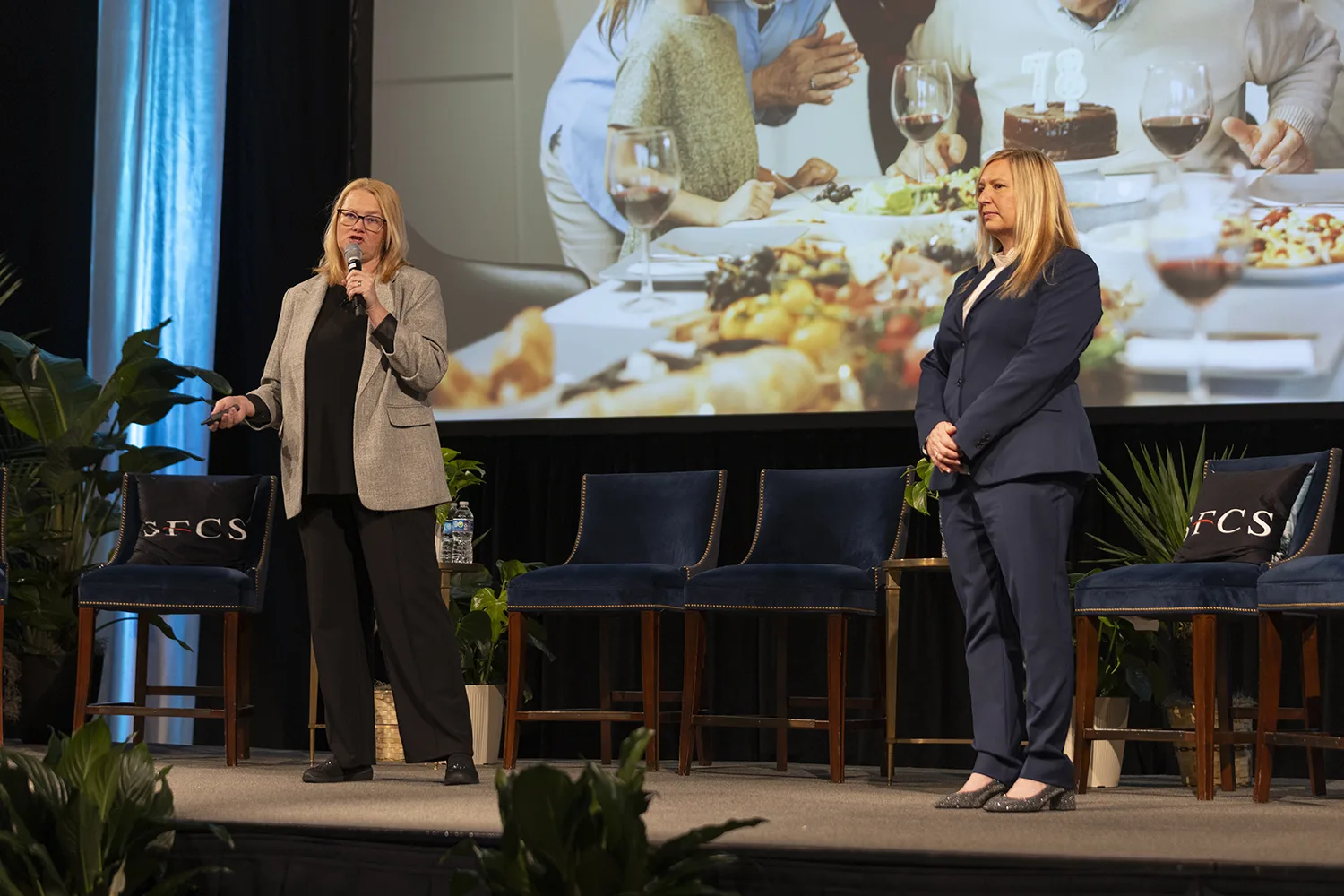
“It's not anything new, but questions still remain [for community leaders]: What truly is intergenerational living beyond just a marketing phase? How can we thoughtfully implement it? And why?,” said Amy Taft, AIA, LEED AP, Project Designer and Associate Principal at SFCS during our annual By Design Conference where she presented on this topic.
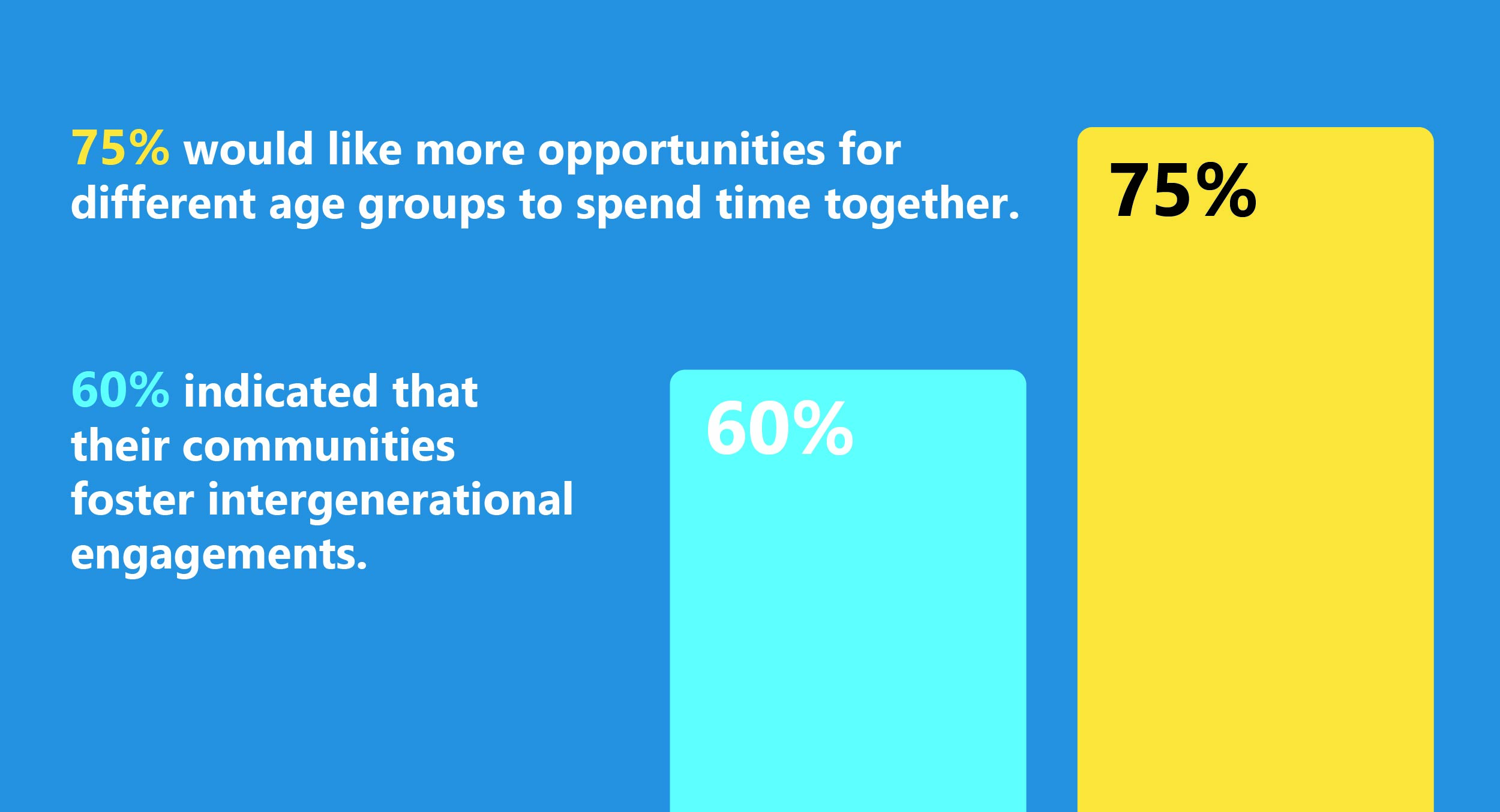
There is already clear demand among senior living communities. Based on information SFCS collected at the 2024 LeadingAge National conference, 60% of senior living C-Suite executive respondents indicated they are doing some form of cross-generational engagement in their organizations. Research from organizations such as Generations United and the Eisner Foundation also found that in a study of over 2,000 adults, 75% indicated a desire for more. This level of interest suggests that it is not a niche concept, but a response to broader expectations around how people want to live.
From a financial perspective, this kind of initiative can help diversify revenue streams. During an SFCS partnered session at LeadingAge Virginia, Tommy Brewer, Senior Director of Senior Living at Ziegler, advised that by opening amenities and experiences to the wider public, organizations can generate income from outside their resident base while also introducing potential future residents to the campus environment long before a move-in decision is made. For some organizations, that matters because funding is not being set aside to replace non-revenue-producing spaces, and cross-generational activities can help generate support for those assets without relying on additional independent living development to pay for them.
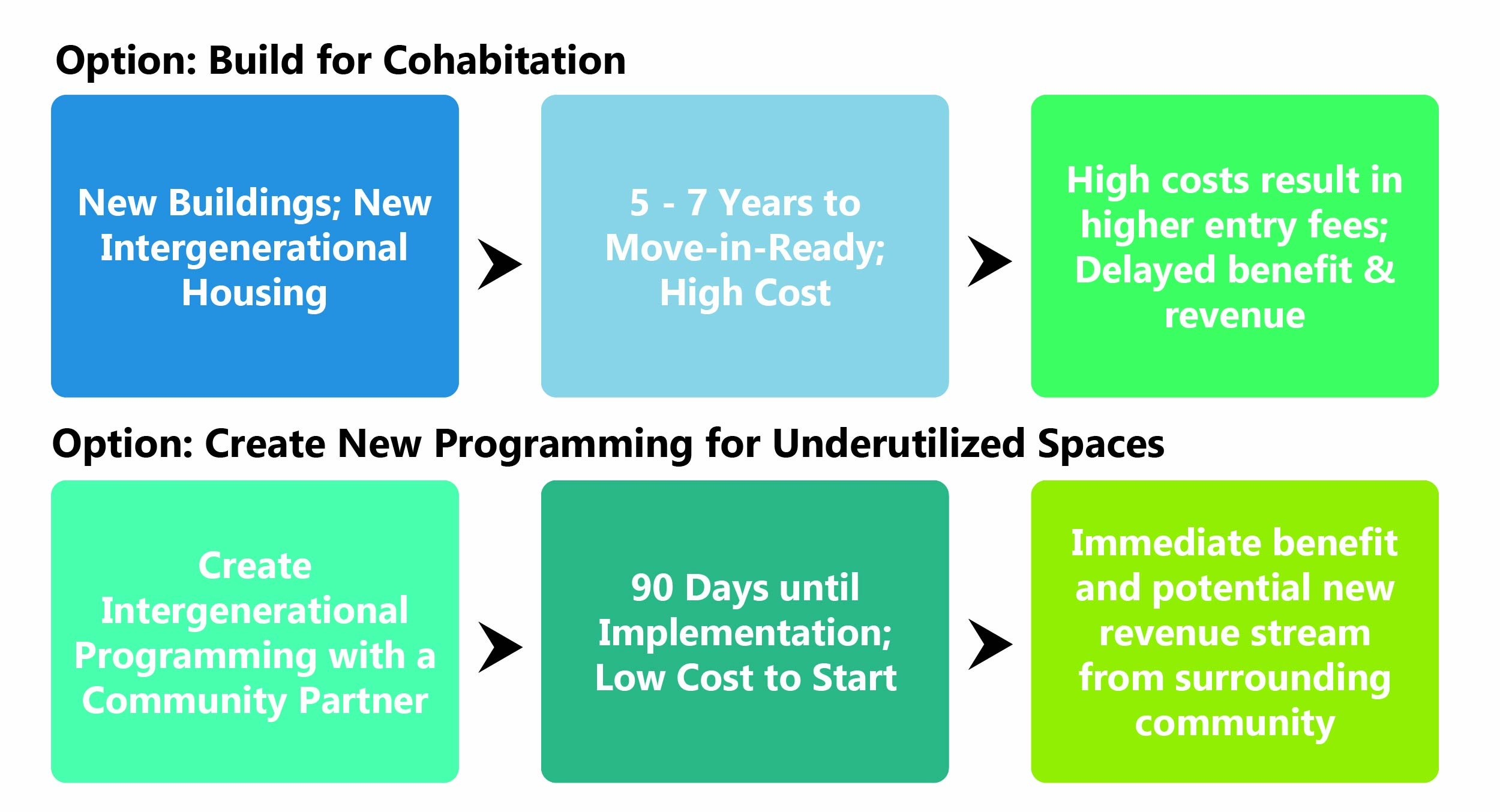
Importantly, there is much that can be implemented with relatively low starting costs. Most campuses already have the physical infrastructure required—underutilized spaces, amenities, and shared-use areas that can be adapted to support intergenerational engagement.
Multigenerational living addresses two foundational needs for residents that are difficult to manufacture: connection and purpose.
A CDC Behavioral Risk Factor Surveillance System (BRFSS) analysis spanning four years found that seniors 65 and older living in intergenerational homes were 23% less likely to experience frequent mental distress including anxiety and depression. One reason offered for that reduced risk is that a greater sense of purpose grew out of frequent social interactions with other generations, rather than through occasional events or visits.
This sense of purpose can be replicated elsewhere by building in repeatable interactions, such as shared tasks, mentoring, and the consistent exchange of knowledge to help residents feel engaged, valued, and grounded in life around them. Seniors involved in these social relationships tend to meet their activity needs with greater mobility and endurance, experience a decline in physical issues, and an incline in cognitive functions.
“The time that they have to interact with the younger generation, sharing knowledge, sharing simple daily tasks and also mentoring has proven to provide them with a greater sense of value, a greater sense of self, and then a greater sense of purpose and all of these things, in turn, combat, feelings of loneliness,” said Carolyn Warden, NCIDQ, Senior Interior Designer and Associate at SFCS at both session presentations.
These benefits aren’t unique to senior living. They mirror what naturally occurs in everyday social settings, where different age groups interact without formal structure.
Despite its potential, this model of living is not without challenges. Operators must address practical realities such as safety, privacy, and regulatory considerations as well as barriers that are rooted in perception rather than reality:
While this can feel complex in a senior living setting, the dynamics themselves are not unfamiliar, they simply haven’t been intentionally designed into these environments.
Leaders often assume intergenerational living requires ground-up development. Rather than building fresh programs from scratch, many organizations find success by replicating what already happens in other environments by encouraging shared moments, informal interactions, and opportunities for overlap.
Many campuses have underutilized amenities and spaces that can be repurposed without significant capital investment, and in many cases the most impactful strategies do not require new construction.
Assistance and education about technology is the most immediate way to bring people together. Adoption among adults 65 years and older has grown significantly, with more residents entering retirement already comfortable with digital tools. At the same time, many existing residents still need support, opening the door to cross-generational interaction. Efforts that bring younger individuals together with older adults through technology assistance can help build confidence and strengthen relationships for all involved. One such example is Warm Hearth Village’s partnership with Virginia Tech that brings students into the community to help residents learn to use technology and build their confidence with it.
To expand an organization’s reach, offerings can range from opening shared spaces to the public to hosting structured events that bring different age groups together. Pools, fitness spaces, meeting areas, dining venues, activity rooms, and outdoor spaces can all support these interactions. Some providers have taken this further with on-campus childcare, such as Westminster Canterbury Richmond, where older adults read with children at their childcare facility and help teach them through daily interaction.
Facility rentals offer another possibility. By making spaces available to the wider public, organizations can generate revenue while introducing outside audiences to the campus environment.
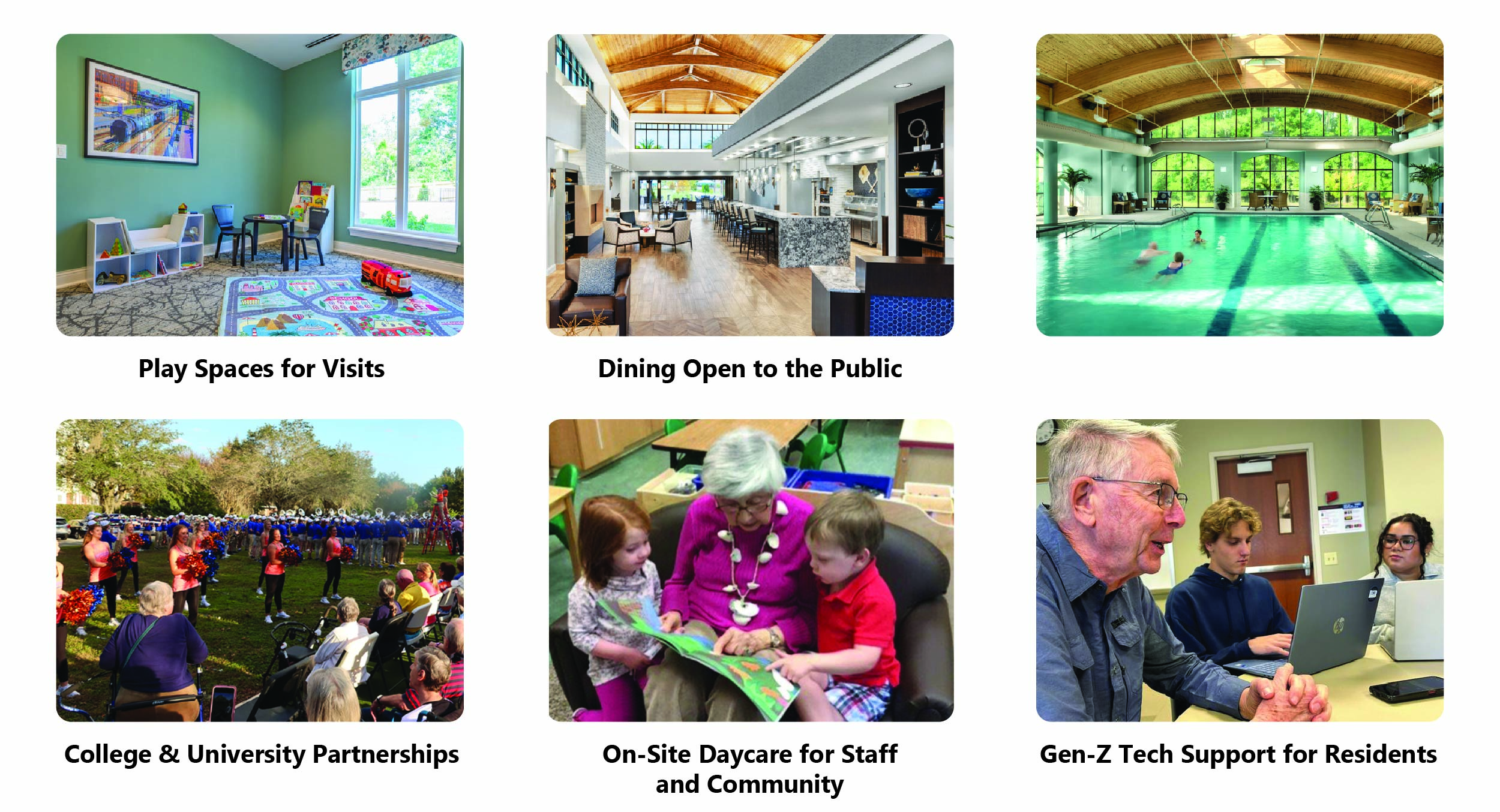
Partnerships with universities and schools provide consistent moments for engagement. Examples include student pairing programs, technology support initiatives, and collaborative learning experiences. These relationships lead to repeatable interaction rather than one-time events and integrate senior living into a broader ecosystem rather than isolating it. For example, Oak Hammock near the University of Florida gives residents access to lifelong learning and shared events. In addition, their partnership with the university’s health system gives their residents priority access to appointments, keeps medical records up to date between the hospital and Oak Hammock staff, and lead to the creation of the Stroke Mobile, which can be dispatched in lieu of an ambulance in the event of an emergency, and has resulted in a cut down in response time.
Another example is the SFCS Sponsored Studio for Senior Living. Warm Hearth Village residents participate in the program with Virginia Tech Industrial Design Studio student groups and volunteer mentors from SFCS. The students spend the semester designing products to enhance the daily lives of older adults while the residents provide insight and user feedback on the prototypes the students create.
Planning greater interaction with people beyond the campus can also be integrated into master planning efforts. Design plays a critical role in whether intergenerational interaction feels natural or forced. Designing environments that feel integrated with the surrounding neighborhood through shared access, walkability, and mixed-use elements supports long-term engagement. Steve Nygren, Founder and Managing Partner of Serenbe, describes this as making room for everyday “common sense ways to connect,” so interaction is not dependent on formal programming. At Serenbe, walkable restaurants and shops, along with regular visitors from the broader region, shape a community that feels active, relevant, and naturally shared across generations.
In addition to master planning, designing architecture and landscaping to reflect the vernacular of the surrounding area helps combat NIMBY, since it doesn’t disguise senior living. The integration reinforces that aging is a natural, visible, and welcomed part of life. When a campus feels institutional or visually disconnected from its neighborhood, resistance often increases because it is perceived as separate from the life around it. But when a community reflects the scale, materials, rhythms, and character of the surrounding neighborhood, it helps blur the lines between age-restricted housing and the neighborhood itself, making belonging feel more intuitive and opposition harder to justify.
Housing strategies are another way to expand multigenerational mingling. Opportunities may include workforce housing or integrating families into surrounding properties, adding additional ways for different generations to interact within the surrounding local ecosystem. Co-housing models such as Treehouse Foundation, Bridge Meadows, and Hope Meadows offer examples of how affordable housing can bring together youth previously in foster care, parents, and older adults in mutually supportive environments that break the traditional model of what is expected from a senior living environment.
Intergenerational living is not a recent idea; it is a familiar social dynamic that senior living can reintroduce with greater intention. By starting small, building from existing assets, and embedding relationship-building into daily operations rather than treating it as a stand-alone program, senior living operators can support experiences that feel more relevant, purposeful, and integrated into life. As consumer expectations continue to shift, organizations that embrace this approach will be better positioned to strengthen occupancy, remain competitive, and support long-term sustainability. In the end, the goal is not simply to add programming, but to shape environments that feel more alive, more socially rich, and more reflective of how people want to live.
“The moments that we create can be found between traditional programing,” said Curtis R. Jennings III, Managing Principal at SFCS, “Continue to learn, continue to grow, continue to be bold.”
This article is a summary of the content presented during the sessions “Living Together, Thriving Together: Designing for Every Generation” presented by Steve Nygren, Carolyn Warden, and Amy Taft at SFCS’s 41st By Design: Create. Connect. Inspire. on February 4th, 2026 and ”Bridging Generations: Designing Intergenerational Senior Living Communities.” presented by Curtis R. Jennings, III, Carolyn Warden, William Lester, and Tommy Brewer at LeadingAge Virginia on June 9th, 2026.
If this year’s conversations around creativity, connection, and future-focused design resonated with you, we hope you’ll consider joining us on February 2 - 4, 2027 at the Hotel Roanoke in Roanoke, VA. Let us know you are interested!

Our team is committed to providing quality service, meaningful connections, and thoughtful design. We believe the balance of these key elements has the power to encourage relationships and create exceptional environments where people – and projects – can flourish.
We improve our services and advertising by using Microsoft Clarity. Learn more by reading our Privacy Policy and Disclaimer.


